
Affichage des articles dont le libellé est film. Afficher tous les articles

mardi 18 février 2025

A chorus line

février 18, 2025 0 Comments

 a chorus line by Richard Attenborough | film Review


A chorus line by Richard Attenborough
Released in 1985
Actors: Pam Klinger, Michael Douglas, Charles McGowan, Vicki Frederick, Michael Blevins, Gregg Burge, Alyson Reed, Justin Ross...
Genre: Musical, Drama


A Chorus Line (1985) is a film adaptation of the hit 1975 Broadway musical of the same name, directed by Richard Attenborough. The story follows a group of dancers auditioning for a Broadway musical, with the demanding director, Zach (played by Michael Douglas), pushing them to reveal personal stories about their lives, dreams, and struggles.

As the audition progresses, each dancer shares intimate details about their past—why they started dancing, personal hardships, and aspirations—highlighting themes of passion, sacrifice, and the uncertainty of a performer's life. One of the key emotional arcs revolves around Cassie (Alyson Reed), a former star dancer who had a relationship with Zach and is now struggling to find her place in the chorus line.

The film explores the harsh realities of show business, where talent isn't always enough, and not everyone makes the cut. The final selection process is both heartbreaking and exhilarating, culminating in the iconic number One, where the chosen dancers perform in perfect unison, emphasizing that despite their individual stories, they ultimately blend into the ensemble.

The film was met with mixed reviews, especially from fans of the original stage production, as it altered or omitted certain songs and character moments. However, it remains a nostalgic look at the struggles and triumphs of performers in the theater industry.

I really loved the film! I haven't seen the stage production yet so my opinion is probably biased and I can't say anything about the numbers that might have been deleted or altered but 

1. I am in love with young Michael Douglas

2. I want to be a stage performer

3. I cried like a baby at the end

What to watch if you liked this film: 


vendredi 7 février 2025

the discreet charm of the bourgeoisie

février 07, 2025 0 Comments

 le charme discret de la bourgeoisie by luis bunuel | film Review


Le charme discret de la bourgeoisie by Luis Bunuel
Released in 1972
Actors: Fernando Rey, Paul Frankeur, Delphine Seyrig, Stéphane Audran, Bulle Ogier, Jean-Pierre Cassel
Genre: Comedy, Surrealist


The Discreet Charm of the Bourgeoisie (1972), directed by Luis Buñuel, is a surrealist satire about a group of upper-class friends who repeatedly try—and fail—to have a meal together.  

Their attempts are constantly interrupted by bizarre and unexpected events, blurring the lines between reality and dream.

They need an army. They need power. They need magic. And they need the one thing only Violet can find—the truth.

Through its absurd and dreamlike structure, the film critiques the hypocrisy, emptiness, and self-importance of the bourgeoisie, using humor and surreal imagery to expose their privilege and detachment from the real world.

For a long time, I thought I hated surrealists because I didn't like Dali. But then one day I watched Bunuel's Belle de Jour and understood how much I actually loved surrealism. Le charme discret de la bouregoisie is one more example of how much I love Bunuel's late work: the alternation between dream and reality (or is there really a difference between the two), this form of hypnosis he puts you under so that you feel compelled to watch the film and don't know what to do after it - and most of all the way he uses sudden noise to cut out conversations (gosh I love that).

Bunuel was looking for a subject on the theme of repetitions. He took something his productor Serge Sliberman had said at one moment and decided to make the opening of the film on it. The idea of the bourgeoisie only came very late in the process of the scenario-making. They mostly filmed the film in Paris or les Yvelines. The film received the Oscar of the best foreign film in 1973, le Prix Méliès in 1972; and Bunuel said of the film: "je fus particulièrement satisfait de pouvoir donner dans ce film ma recette du dry martini" (Luis Bunuel, Mon dernier soupir, 1982, 306).

I have been obsessed with the scene that happens in what I would call the underworld, but which is probably more the limbo world. The scene were they end up on stage, with someone saying the lines, and everyone runs off stage was also incredible.

What to watch if you liked this film: 


jeudi 6 février 2025

Luis Buñuel: a biography

février 06, 2025 0 Comments

 Luis Buñuel: a biography

Life 

Luis Bunuel was born in Aragon, Spain on February 22nd 1900. His father was working in hardware business in Cuba where he made a fortune before retunring to Calanda in 1898. At that time, he married an eighteen year old girl, Maria Portolés Cerezuela, who gave him seven children: Luis was the oldest. 

In Calanda, "the Middle Ages lasted until World War 1" - Luis Bunuel, My Last Sigh, 1983.

When he was very young (only four months old), Luis moved with his family to Zaragoza, and he went to the private Colegio del Salvador - very strict Jesuit education from seven to fourteen years old. When he was young he was very religious, but at some point discovered what he perceived as "the illogicality of the Church, along with its power and wealth" and rejected it deeply. (Ruth Brandon, Surreal Lives: The Surrelaists 1917-1945, 1999).
He got kicked out of school and refused to go back - he lied saying he had been expelled when in truth he had received the highest grade on the world history exam. He went to a public highschool and graduated at sixteen years old. He already liked cinema a lot and played the violin and did boxing. At 17 years old he dated Concha Mendez, future poet and dramatist, but she broke up with him after five years.

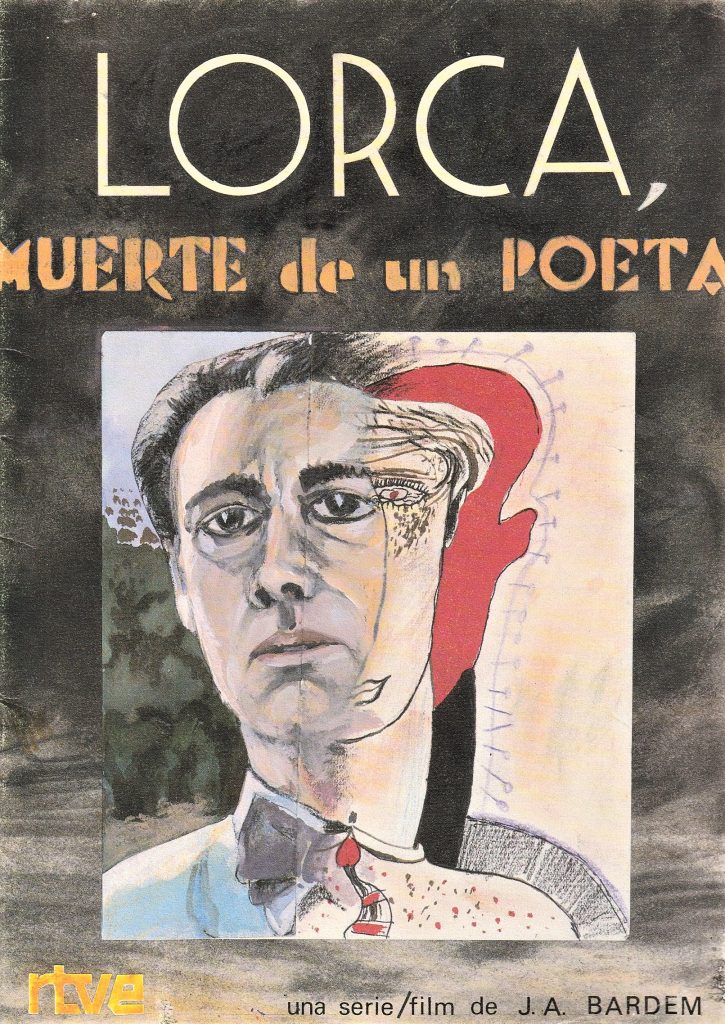
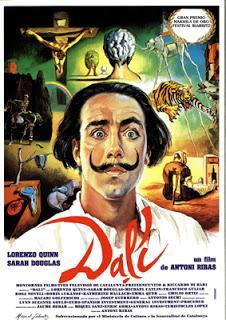
He went to the University of Madrid in 1917 where he studied agronomy, then industrial engineering, and finally philosophy. He created friendship with Salvador Dali and Frederico Garcia Lorca - they became "La Generacion del 27" (La Generacion del 27: Dali, Bunuel, and Lorca. Poets.org. 2013). He was very taken with Garcia Lorca, but was much more jealous of Dali, who was also very close of Lorca. As a student, he proclaimed himself an accomplished hypnotist and he said that watching movie was a form of hypnosis: "This kind of cinematographic hypnosis is no doubt due to the darkness of the theatre and to the rapidly changing scenes, lights, and camera movements, which weaken the spectator's critical intelligence and exercise over him a kind of fascination."Buñuel, Luis (1983). My last sigh. New York: Knopf"

He moved to Paris in 1925 as a secretary in the International Society of Intellectual Cooperation. He went to movies very often (as three times a day) and met with other artists such as the pianist Ricardo Vines. He decided to focus on cinema and went to a private film school run by Jean Epstein. He then started to work as an assistant director for Jean Epstein on the films Mauprat, La chute de la maison Usher; and for Mario Nalpas on La Sirène des Tropiques. He also made an apparition on screen in Carmen (1926). He met his future wife in 1926, Jeanne Rucar Lefebvre, who had won a bronze medal at the 1924 Paris Olympics. They got married in 1934 and remained married all his life. They had two sons, Jean Luis and Rafael.

Around 1927, Bunuel got into a fight with Epstein because he refused to work with his mentor, Abel Gance. Epstein told him ""How can a little asshole like you dare to talk that way about a great director like Gance?" (Taléns, Jenaro (1993). The Branded Eye: Buñuel's Un Chien Andalou. Minneapolis: University of Minnesota Press) and then "You seem rather surrealist. Beware of surrealists, they are crazy people."De La Colina, Jose (1994). Objects of Desire: Conversations with Luis Bunuel. Marsilio Publishers. p. 80". 

He worked then as a film critic for La Gaceta Literaria and Les cahiers d'art. He was exchanging in periodicals with Dali, writing essays on cinema and theatre. He collaborated with Ramon Gomez de la Serna on the script of Los Caprichos. 

With the war in Spain in 1930, Dali became "very excited about politics and the ideas that were everywhere in pre-Civil War Spain" (Rucar de Buñuel, Jeanne (1990). Memorias de un mujer sin piano.) - but later in his life he denied being a Communist. In 1932, he was invited as a film documentarian for Mission Dakar-Djibouti led by Marcel Griaule, which unearthed a lot of African artifacts; but Bunuel declined. However, it got him interested in ethnography and he read Las Jurdes: étude de géographie humaine by Maurice Legendre which made him want to make a film on it: Las Hurdes: Tierra Sin Pan. The film was banned by the Second Spanish Republic and by the dictatorship of Franco.

After that, he worked in the dubbing department of Paramount Pictures and then for Warner Brothers after his marriage in 1934 because the studios were in Madrid. Ricardo Urgoiti, one of his friends, asked him to produce films for a mass audience and Bunuel accepted but at the condition that his involvment be entirally anonymous - he didn't want to change his reputation as a surrealist. It is then a supposition that these four were directed by him: Don Quintin el amargao, La hija de Juan Simon, Quien me quiere a mi? and Centinela, alerta!

During the Spanish Civil War, Bunuel worked with the Republican Government - he was asked to catalogue Republican propaganda films in Geneva and Paris. He also did some spying and supervised the documentary Espana 1936. Frederico Garcia Lorca was killed by Nationalist milita in 1936. The Spanish Ambassador asked of Bunuel to visit Hollywood to give advice on the films made on the Spanish Civil War in the US. But when they arrived in the US, the Civil War ended so the making of these films ended, and Bunuel couldn't return under Franco's dictatorship. Bunuel was "immensely attracted by the American naturalness and sociability" (Buñuel, Luis (2002). An Unspeakable Betrayal: Selected Writings of Luis Buñuel. Berkeley and Los Angeles: University of California Press)

He made friends in Hollywood with Frank Davis, MGM producer and communist, but Bunuel didn't succeed in making great projects in Hollywood because he ""had none of the arrogance and pushiness essential for survival in Hollywood" (Brandon, Ruth (1999). Surreal Lives: The Surrealists 1917–1945).  He went then to New York City where he met Iris Barry, chief curator of film at MoMA. He was then hired to produce a short version of Triumph of the Will. He stayed at MoMA, reviewing and editing anti-fascist propaganda films for Latin America. 

In 1942, Bunuel asked for American citizenship but at the same time Dali published his autobiography in which he said Bunuel was a Communist and an atheist. Bunuel resigned from MoMA and confronted Dali in New-York about his book - he shot him in the knee. He then returned to Hollywood in 1944 as a Dubbing Producer for Warner Bros. At Warner Bros Bunuel tried to develop some projects: 

- a scenario The sewers of Los Angeles 
- a piece called La novia de medianoche (later filmed by Antonio Simon in 1997)
- screenplay Goya and the Duchess of Alba that he had started in 1927

In 1945 he ended his contract with Warner Bros to "realize my life's ambition for a year: to do nothing" (Bazin, André (1982). The cinema of cruelty: from Buñuel to Hitchcock. New York). 

In 1946, his old friend and producer Denisa Tual (widow of Pierre Batcheff, leading man in Un chien Andalou) asked him to adapt Lorca's play La casa de Bernarda Alba for a production in Paris. However they had problems with Lorca's family about the rights. However he met Dancigers who ran an independant production company and they started to work on Gran Casino, a musical period piece - some called it a fiasco. Bunuel worked on the scenario of Si usted no puede, yo si, filmed by Julian Soler in 1950. He worked also with the poet Juan Larrea on Illegible, hijo de flauta. Bunuel continued working with Dancigers and developed a technique for making films cheaply and quickly by doing only 125 shots. In 1949, Bunuel renounced his Spanish citizenship to become Mexican. Because of the success of El Gran Calavera, Dancigers gave Bunuel more freedom. Because Bunuel knew Dancigers didn't like experimental films, he made a commercial project Mi huerfanito jefe! which ended up being called Los olvidados. The film was made quickly but a lot of the crew confronted Bunuel on set about the quality of the movie, saying it was a bit like garbage. The film wasn't well received - Frida refused to speak to Bunuel after the initial screening. Dancigers asked to change the ending of the film for a happy one, but it wasn't enough to save the film. However, the film was well received at Cannes in 1951 by the Surrealists (Breton et Jacques Prevert). Bunuel won Best director prize and the film was much better accepted in Mexico. The director then stayed in Mexico where he made over 21 films, all of them talking about sexual pathology, the destructive effects of machismo, the blurring of fantasy and reality, the status of women in a male-dominated culture, and the absurdity or religious-life.

However, Bunuel also interacted with the international film scene. His first color film was Adventures of Robinson Crusoe, made thanks to Dancigers' partner Henry F. Ehrlich. He also worked a lot in France on his "revolutionary triptych", in that each of the film is "openly, or by implication, a study in the morality and tactics of armed revolution against a right-wing dictatorship" (Durgnat, Raymond (1968). Luis Buñuel. Berkeley: University of California Press.)

After the release of That Obscure Object of Desire, where he had a lot of arguments with Maria Schneider because of her use of drugs, so they shot with different actresses; Bunuel retired from his career as director. He wrote his autobiography with Carrière in 1982, Mon Dernier Soupir.

Bunuel told to Carlos Fuentes: "I'm not afraid of death. I'm afraid of dying alone in a hotel room, with my bags open and a shooting script on the night table. I must know whose fingers will close my eyes."Fuentes, Carlos (18 December 2000). "The Discreet Charm of the Bourgeosie"). He died in Mexico in 1983 from diabetes.

Films 

Un chien Andalou - 1929
It was his first film that he shot and directed with Salvador Dali. It is only 16-minute short and was financed by Bunuel's mother. It was very well received by the French surrealist movement.

L'Age d'Or - 1930
Thanks to the success of Un Chien Andalou, he worked with Dali on another short film by Marie-Laurie and Charles de Noailles who owned a private cinema in Paris.

Menjant Garotes - 1930

Las Hurdes: Tierra Sin Pan - 1933

The Vatican Pio XII - 1940

Gran Casino - 1947

El gran calavera - 1949

Los olvidados - 1950

Susana - 1951

La hija del engano - 1951

Subida al cielo - 1952

Una mujer sin amor - 1952

El bruto - 1953

El - 1953

La ilusion viaja en tranvia - 1954

Abismos de pasion - 1954

Robinson Crusoe - 1954

El rio y la muerte - 1954

Ensayo de un crimen - 1955

Cela s'appelle l'aurore - 1956

La mort en ce jardin - 1956

Nazarin - 1959

La fièvre monte à El Pao - 1959

La joven - 1960

Viridiana - 1961

El angel exterminador - 1962

Le journal d'une femme de chambre - 1964

Simon del Desierto - 1965

Belle de Jour - 1967

La voie lactée - 1969

Tristana - 1970


Le fantôme de la liberté - 1974

Cet obscur objet du désir - 1977

Films, books and other media about Luis Bunuel: